Lessons Guide
Singing Lessons for Teens: Building Confidence and Skill
Lessons Guide
What if the quietest kid in the room is just a breath away from being the loudest on stage?
Parents don’t sign their teens up for music to make pop stars. They want kids who speak up, stand tall, and finish what they start. Singing lessons for teens give both: a skill you can hear and confidence you can see.
Angeles Academy of Music in Los Angeles sees a big change every year. Shy students start speaking up. Parents say their teens become more expressive, disciplined, and even better students in school.
School of Rock has perfected its method over 25 years. It mixes weekly private lessons with band rehearsals and live shows. This mix leads to growth.
Good teen vocal training starts with the basics from day one. These include breathing, posture, diction, pitch, timbre, and tempo. These basics help singers in every genre.
This guide will help you understand when your teen is ready, how to develop their voice, and the core techniques. It also covers different lesson formats, how to choose a good teacher, practice routines, exploring different genres, and stage skills.
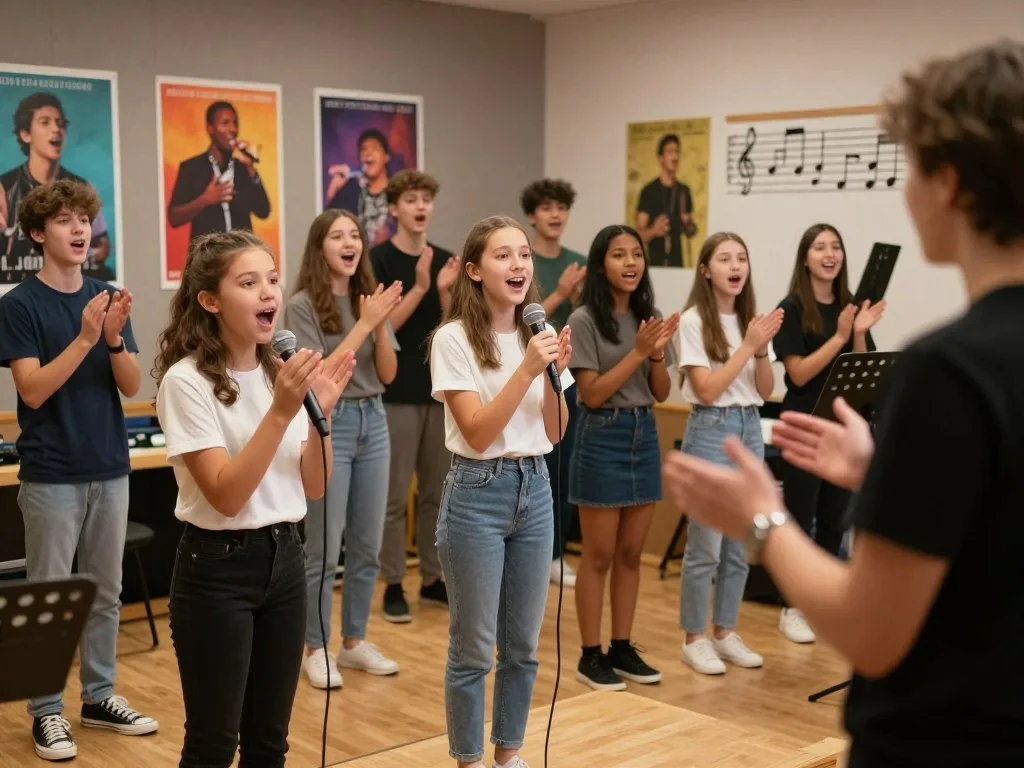
Singing is special for teens. It means sharing your voice with others. This can be scary but also builds lasting confidence.
Teachers at Angeles Academy of Music see this change often. A student who was shy starts to shine on stage.
Shy teens do well in one-on-one lessons. They learn to see mistakes as chances to grow. This builds real strength.
Teens start by singing for a coach. Then, they sing for a small group. Next, they perform in front of an audience. Each step is a big step forward.
Skills like breathing and posture help in speaking too. Teens who sing become more confident in class and in public.
Singing also makes teens feel better. It lowers stress and boosts happiness. It helps teens find their unique voice and feel more confident.
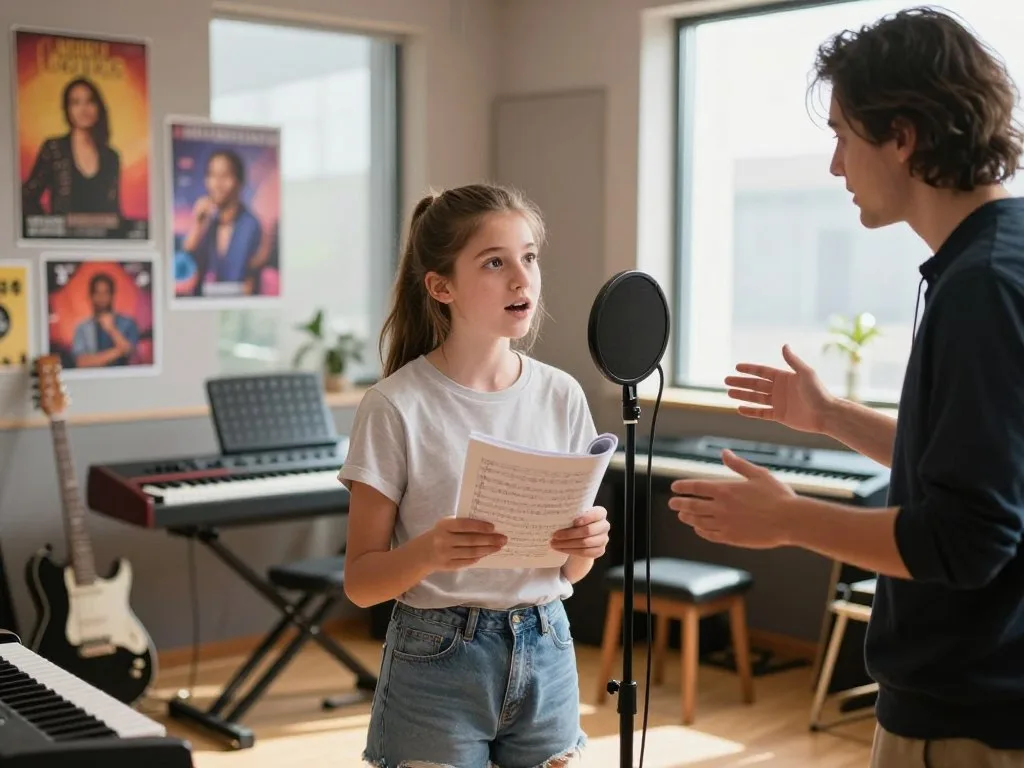
Being ready for voice lessons isn’t about age. It’s about wanting to learn. Most vocal coaches say kids can start around six to eight. This is when they can focus and their voice is a bit more mature.
Young kids do well in fun music programs. For example, School of Rock’s Little Wing classes are for ages 4 and 5. These programs focus on playing, not just learning.
Teens, on the other hand, can learn real techniques. They can learn about breath support, matching pitches, and warm-ups. They understand why these exercises are important.
Look for a teen who loves to sing at home. If they search for new artists or try to learn a song, they’re ready. Being curious and willing to try new things is key.
The voice changes a lot during the teen years. The larynx grows, and the vocal folds get longer. This can make singing feel unstable at first.
Boys might notice their voice cracking or dropping. Girls might notice changes in tone and breathiness. A good teacher will adjust to these changes.
Starting singing lessons during this time is important. It helps build good habits for the voice. It’s never too late to start, as long as the lessons match your teen’s level.
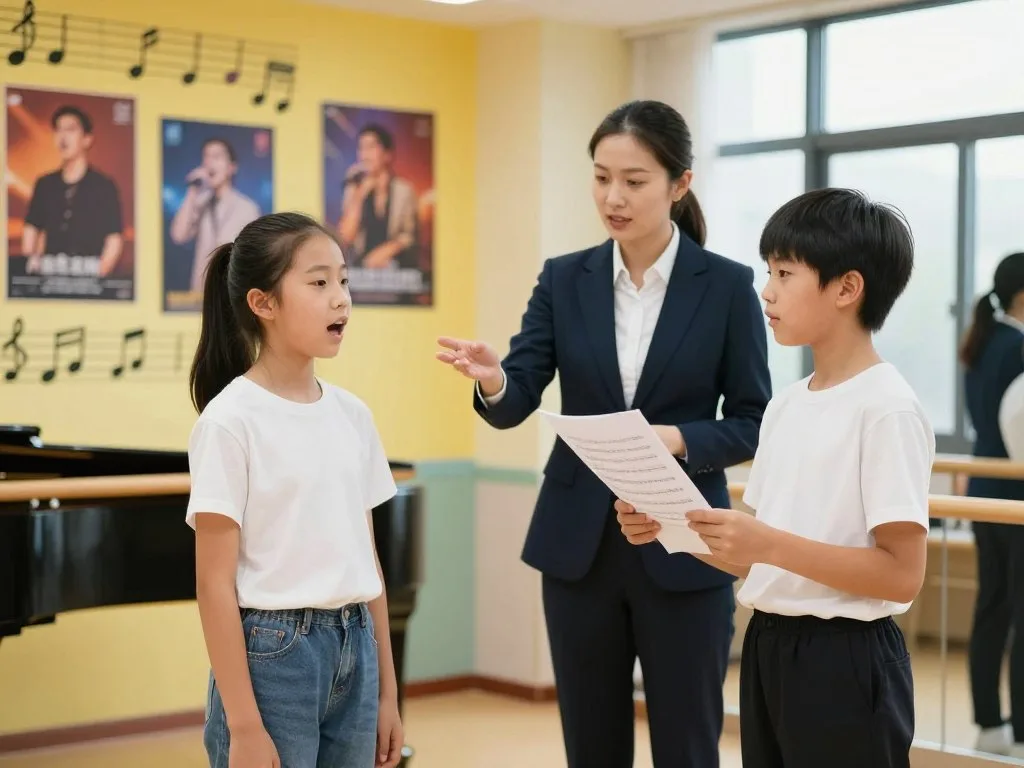
Good singing starts with the basics, not fancy tricks. Programs like School of Rock focus on breathing, posture, and diction. These skills are the foundation for all singing.
Diaphragmatic breathing fills the belly, not the chest. This low support keeps notes steady and phrases strong. It also helps with stress and relaxation during a busy school year.
Good posture lets the voice work better. A relaxed jaw and open chest help too. Singers practice clear words and strong projection in warm-ups.
Ear training helps teens hear and match pitches. A study in Music Perception: An Interdisciplinary Journal shows it improves singing accuracy.
Coaches teach smooth voice transitions and range growth. They also work on finding a unique sound. This is key in teenage voice development.
Good vocal technique for teens means taking care of the voice. Warm up, drink water, avoid smoking, and rest. Singing is hard work.
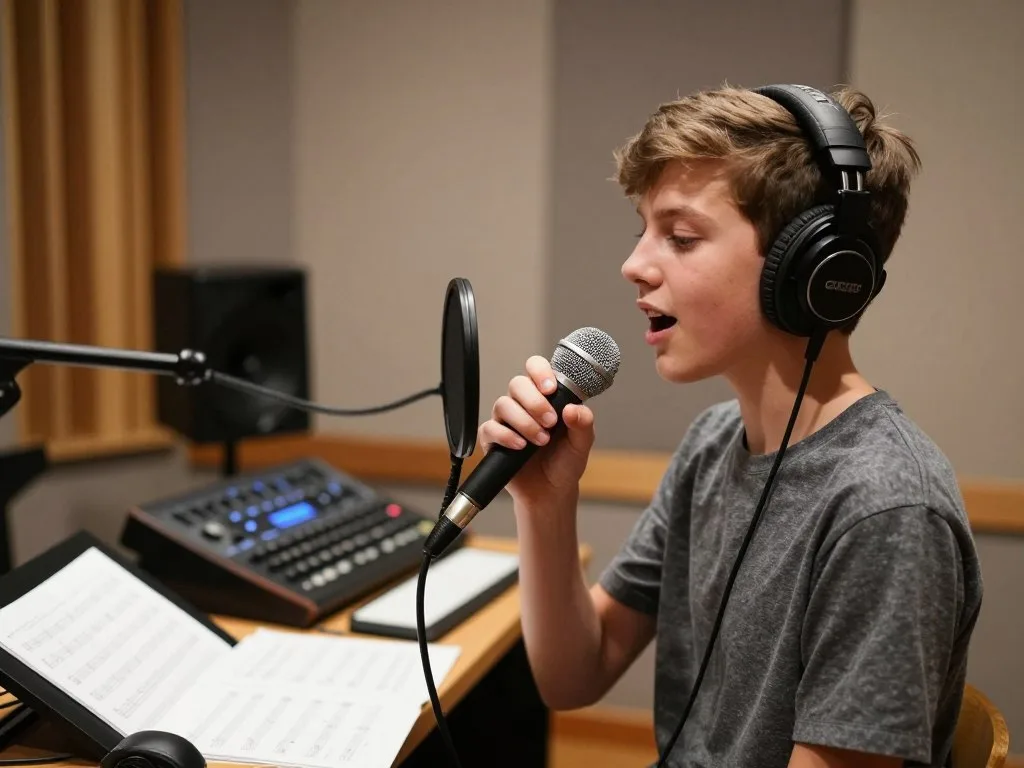
After learning the basics, the next step is where and how to practice. The format you choose affects motivation, consistency, and progress. Some prefer one-on-one, while others enjoy being with bandmates.
Private sessions focus on your teen’s skills. Group classes teach harmonizing and blending. Choirs assign parts, teaching to listen and sing together.
Programs like School of Rock offer private lessons and group rehearsals. Students can practice anytime the school is open.
Online coaching uses the same curriculum as in-person classes. Many teens feel more comfortable singing at home. This leads to more practice and fewer missed sessions.
For remote training, you need a device with a camera and microphone. A quiet room and good headphones are also essential. School of Rock has over 1,000 items for better sound.
Pricing varies by program and location. Check with your local school for current rates.
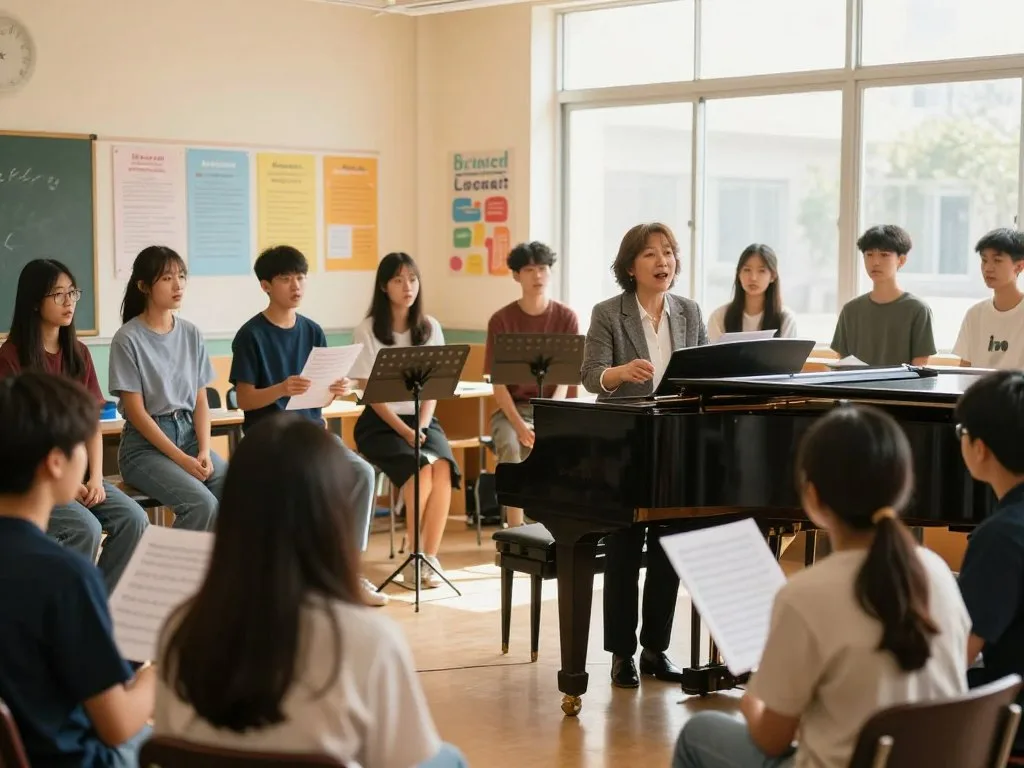
Choosing the right teacher is key after picking a format. Not all vocal coaches are good with young singers. Teens need patience, encouragement, and understanding about their changing voices.
Ask questions before signing up. A trial lesson can tell you more than any website.
Teachers who focus on teenagers know how to adjust exercises for a developing voice. They also know how to help a nervous 15-year-old. Studios like Angeles Academy of Music focus on growth, both musical and personal.
Good high school singing instruction has a clear path but also allows for personal goals. Ask if lessons are recorded for home review. Ask how progress is tracked each week. The School of Rock Method uses a U.S. patent and a Method App, among other tools.
Quality youth vocal coaching includes chances to perform. This could be a live show or a virtual recital. Programs that mix games, favorite songs, and achievable goals keep teens engaged. Look for a supportive place that also challenges your singer.

Great lessons only work when the habits between them hold up. A steady routine turns new skills into muscle memory. This is where real progress in teen vocal training happens.
Instructors at School of Rock suggest aiming for about 30 minutes of singing every day. Beginners can start smaller, around 10 to 15 minutes daily. As stamina grows, they can stretch to 20 or 30 minutes.
With regular practice and a positive attitude, many students sing with real confidence within six months. Advanced ability often takes three to five years of steady work. Results vary by student, so treat these as guideposts.
One drill builds concentration fast: hold a single note and slowly raise the volume without sliding off pitch. It demands careful listening, breath adjustments, and precise timing. Skills like this show up in singing lessons for teens over and over.
Parents can help by setting up a quiet, distraction-free corner for practice. Celebrate effort instead of perfection, react with genuine enthusiasm. Leave technical corrections to the coach so nerves stay low.
Working on vocal technique for adolescents supports memory, reading comprehension, and math skills. Singers count beats, follow patterns, and memorize lyrics and timing.
Once your teen practices regularly, it’s time to try different styles. Singing in various genres stretches the voice and keeps lessons fun. Learning classical, jazz, folk, and pop helps teens understand different cultures and improve their singing skills.
Each genre has its own challenges. Rock music needs strong vocals and stamina. Pop focuses on clear singing and rhythm. R&B is all about building vocal runs and control.
Jazz improves improvisation skills, and musical theater requires telling stories through singing. Teens usually start with their favorite styles and then explore others as they get better.
Group singing teaches skills solo singing can’t. Harmony requires listening and matching pitches and volumes. In bands, teens learn to lead and follow, trading vocals and feeling the group’s energy.
Adolescent singing classes often combine group work with one-on-one coaching. This helps teens improve their singing in a supportive environment.
Writing songs is a great way for teens to express themselves. Studies show that singing and creative activities help teens manage emotions and connect with others. Teens who write songs often develop empathy too.
Learning to sing also helps with playing other instruments. Good ear training makes learning piano, guitar, or violin easier. Breath control improves playing wind, brass, and string instruments.
Technique is key, but being on stage changes everything. Programs like School of Rock mix private lessons with band rehearsals and live shows. This way, your teen practices with a real goal in mind.
School productions teach more than just music. Students plan choreography, design costumes, and set up the stage. They learn to work together, communicate, and adapt.
At places like Angeles Academy of Music, students start shy but soon own the stage. Strong singing instruction adds emotion to every note. It makes singing feel expressive, not just mechanical.
Singing does more than entertain. It boosts lung capacity, mindfulness, and emotional health. It can even spark a lifelong love of music. Book that first lesson with a program that offers private coaching, group rehearsal, and live performance.

Compare real prices, local teachers and free choirs, city by city.
Browse singing lessons by city