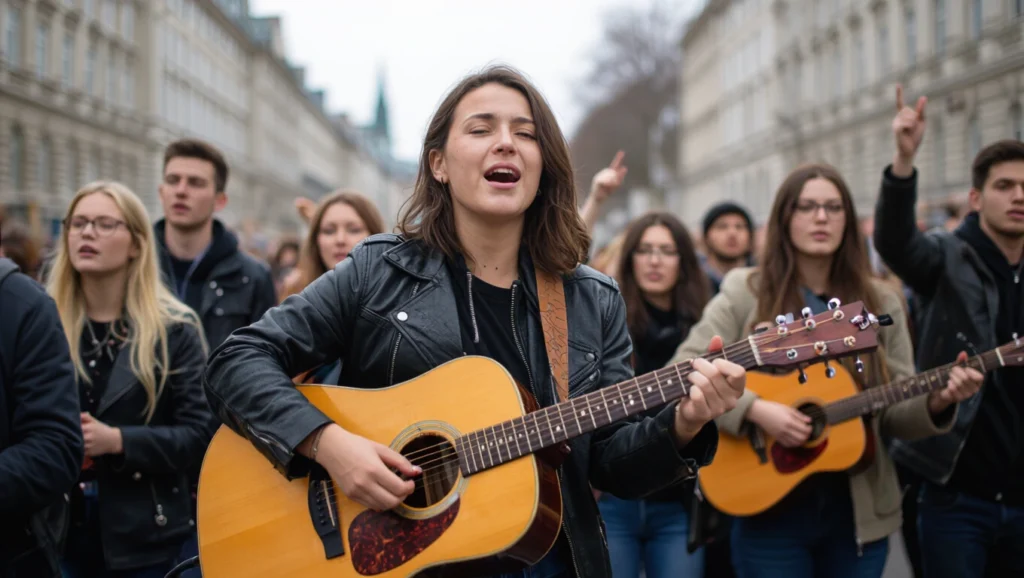
It’s necessary to understand how protest songs have shaped societal movements throughout history.
These powerful musical expressions capture your emotions and convey messages of resistance, justice, and change. From labor struggles to civil rights, protest songs have served as a rallying cry, uniting communities and inspiring action.
As you explore their evolution, you’ll discover how these anthems continue to resonate in today’s climate, influencing generations and leaving a lasting impact on our cultural landscape.
The Roots of Dissent: Origins of Protest Songs
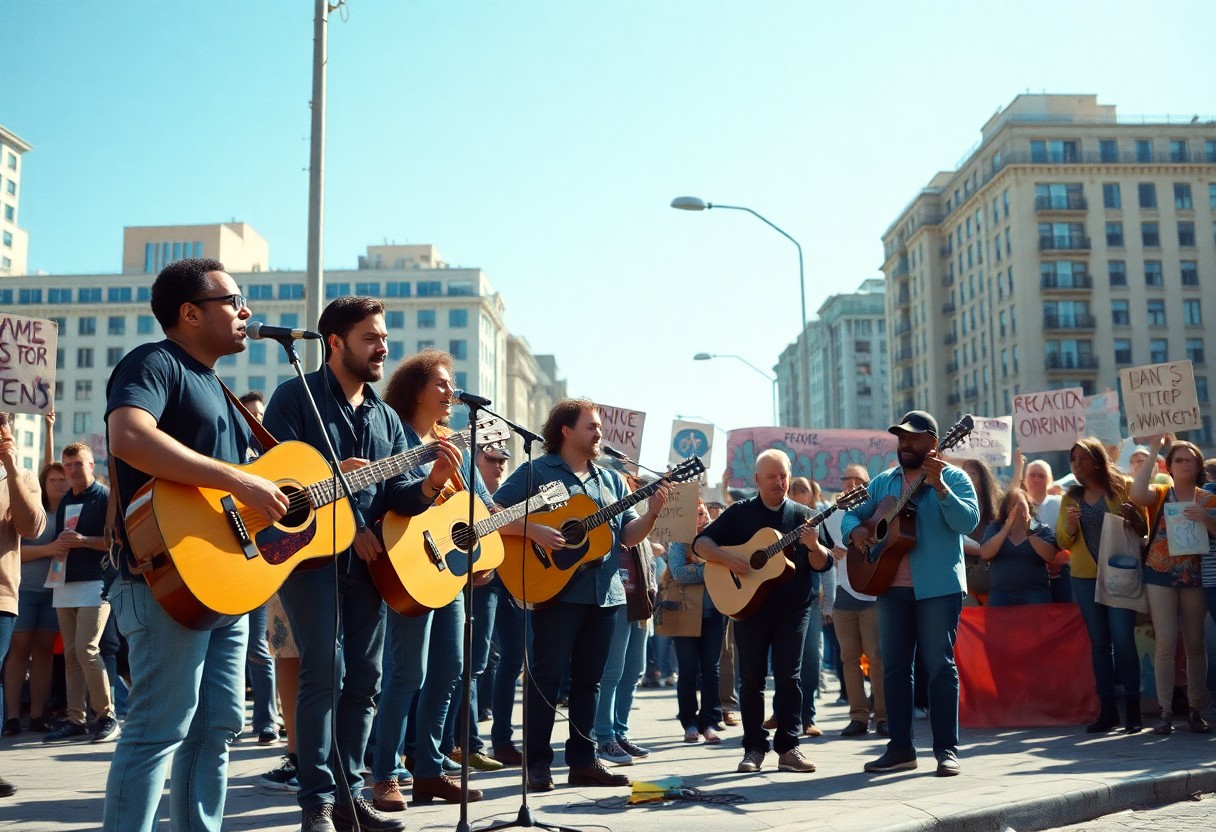
Protest songs emerged as powerful tools for social change, often rooted in centuries of folk traditions. You can trace their origins to oral storytelling, where music was used to express dissent and unite communities against oppression.
These songs challenged injustices, reinforced cultural identities, and served as a means of communication during pivotal historical moments, such as the Civil Rights Movement and anti-war protests.
Historical Context: Folk Traditions and Social Movements
Historical context reveals that folk traditions have long been intertwined with social movements. You’ll find that these genres often reflected the struggles of the common people, resonating with those fighting for rights or addressing grievances.
As you delve into the past, consider how songs like “This Land Is Your Land” not only capture the essence of American landscapes but also act as a rallying cry for equity and inclusivity.
Key Figures: Pioneers Who Shaped the Genre
Pioneers of protest music include Bob Dylan, Pete Seeger, and Phil Ochs, whose works are integral to understanding the genre’s evolution. These artists didn’t shy away from addressing controversial issues; instead, they wielded their music as a form of activism.
Bob Dylan’s 1963 anthem “Blowin’ in the Wind” posed pressing questions about peace and freedom, while Pete Seeger’s fervent performances at political rallies cemented his role as a folk legend. Each pioneer contributed uniquely to the collective voice of dissent in their time.
The impact of figures like Bob Dylan cannot be overstated; his songwriting transcended mere entertainment and became a powerful vehicle for activism.
For instance, Dylan’s lyrics often intertwined personal experiences with broader societal issues, making them relatable and universally understood. Similarly, Pete Seeger’s dedication to social justice and environmental causes showcased how music could inspire movements and mobilize crowds.
These key figures not only shaped the sound of protest songs but also paved the way for future generations, ensuring that music remains a vital component of social change. Their legacies influence contemporary artists who continue to use their platforms for activism today.
The Soundtrack of Change: Significant Eras and Events
Protest songs have often served as powerful reflections of societal upheaval, shaping movements and fostering solidarity during pivotal moments in history. Each era is marked by distinctive melodies and lyrics that resonate with listeners, inspiring action and awareness.
From the Civil Rights Movement to anti-war protests, these songs act as both anthems and emotional outlets, encapsulating the struggles and aspirations of those striving for change.
The Civil Rights Movement: Melodies of Freedom
The Civil Rights Movement produced several anthems that encapsulated the fight for racial equality and justice. Songs like “We Shall Overcome” became rallying cries, uniting individuals in their quest for civil rights.
Your connection to the music amplifies the message of hope and resilience, fostering a sense of community among activists advocating for change.
Anti-War Anthems: Music Against Militarism
Anti-war anthems emerged as a significant force during times of conflict, particularly during the Vietnam War. Artists like Bob Dylan, Joan Baez, and Creedence Clearwater Revival brought the horrors of war into the public consciousness, with songs that resonated deeply among those opposed to militarism.
These compositions not only highlighted the human cost of conflict but also galvanized collective dissent, uniting voices against war.
Anti-war anthems often featured poignant lyrics and haunting melodies, igniting emotional responses that transcended generations. During the 1960s, songs like “Fortunate Son” by Creedence Clearwater Revival critiqued social stratification and the disparity in sacrifice during the Vietnam War, resonating with those who felt disenfranchised.
You can trace a lineage through these songs that directly influenced protests and legislative actions, illustrating music’s power to challenge authority and advocate for peace. This musical legacy continues to inspire contemporary movements against war and violence, reminding you of the enduring fight for justice and humanity.

Musical Evolution: Genres and Innovators
Your understanding of protest music deepens as you explore its evolution across various genres. Each musical style has contributed its unique flavor to the protest song tradition, from the rustic tones of folk music to the electrifying riffs of rock.
Innovators like Bob Dylan and Joan Baez in the 1960s paved the way for this genre’s expansion, bolstering political messaging with memorable melodies.
As genres evolved, artists pushed boundaries, blending styles and challenging the status quo, illustrating how music can be both an art form and a powerful vehicle for change.
Folk, Rock, and Beyond: Expanding Protest Genres
Your exploration of protest music wouldn’t be complete without recognizing the significant role of folk and rock.
The folk revival of the 1960s, led by artists such as Pete Seeger, amplified social justice messages, while rock icons like Creedence Clearwater Revival and Rage Against the Machine propelled protest songs into mainstream culture.
These genres opened doors to new sounds and approaches, inspiring artists across generations to vocalize dissent through creative expression. As the fabric of music changed, so did the methodologies of protest.
Modern Influences: Hip-Hop and Global Perspectives
Your journey through protest music reaches contemporary heights with the emergence of hip-hop as a multifaceted platform for social commentary.
Artists like Kendrick Lamar and Common tackle issues such as systemic racism and police brutality, employing both lyrical complexity and musical innovation.
This genre’s global reach enables different cultures to share their struggles, forming a collective voice that resonates beyond borders.
Hip-hop’s grip on the protest song framework harnesses storytelling and rhythm to engage audiences in the discourse surrounding social justice. With its roots in the African American experience, hip-hop integrates cultural elements unique to various communities, from the vibrant sounds of Afrobeat to the influences of reggae.
Global icons like Burna Boy and M.I.A. contribute their perspectives, weaving local issues into a broader narrative of resistance. These artists use their platforms to galvanize movements, proving that the spirit of dissent is alive and evolving across diverse musical landscapes.
The Impact of Technology: From Vinyl to Viral
The transformation of how protest songs are disseminated showcases significant changes in technology and culture. From vinyl records sparking the movement in the 1960s to today’s viral digital landscape, the accessibility and reach of these songs have expanded dramatically.
This evolution is crucial in understanding the lasting influence of protest music. For more insights, visit this Brief Overview of Protest Songs.
The Role of Radio, MTV, and Streaming Platforms
Social Media’s Explosion: New Voices and New Audiences
Social media has democratized the creation and sharing of protest songs, allowing anyone with a smartphone and internet access to voice their opinions.
Artists like Halsey and Lil Nas X utilize platforms like TikTok and Instagram to spread their messages quickly, often transforming personal narratives into global conversations.
This immediate engagement fosters a sense of community among listeners and encourages collective action.
The rise of social media has led to an explosion of new artists and diverse perspectives within the protest music landscape. You can witness movements like Black Lives Matter utilizing hashtags to promote songs that resonate with their causes.
Viral challenges on TikTok not only popularize songs but also educate younger audiences on social issues, reinforcing the connection between music and activism.
This shift illustrates that contemporary protest songs are no longer confined to traditional outlets; they thrive in digital spaces, forging connections across the globe.
Cultural Reflections and Backlash: The Dual Nature of Protest Music
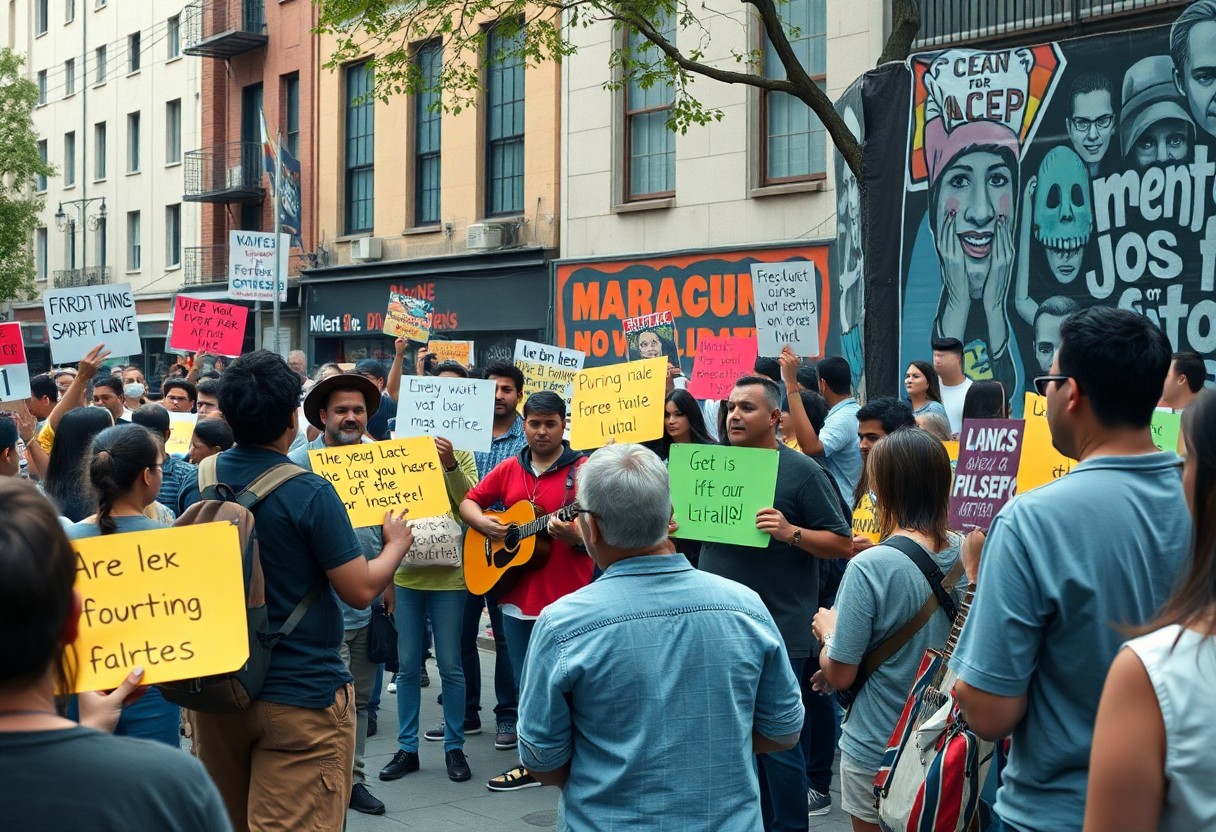
Protest music serves as a mirror, reflecting societal struggles and triumphs while simultaneously provoking backlash from opposing factions.
The resonance of these songs often ignites passionate debates about their relevance, artistic integrity, and political impact. You may find that while many celebrate them for their bold critiques, others perceive them as divisive or overly simplistic.
This duality underscores the tension inherent in artistic expressions of dissent, demonstrating how music can simultaneously foster unity and division within communities.
Celebrating Diversity: Voices from the Margins
Voices from marginalized communities have historically infused protest music with diverse perspectives and rich narratives.
You can see how musicians like Billie Holiday, with her poignant “Strange Fruit,” and contemporary artists such as Lil Baby in “The Bigger Picture” have harnessed their platforms to amplify issues of racial inequality, gender rights, and social justice.
These contributions celebrate cultural diversity, creating a tapestry of experiences that resonate on personal and collective levels.
Criticism and Resistance: Pushback Against Protest Art
Not all responses to protest music are supportive; artists often face criticism and resistance from various sectors of society.
Conservative groups, especially, have pushed back against songs that challenge the status quo, labeling them as unpatriotic or incendiary.
You might notice conversations surrounding the appropriateness of protest art in mainstream media, with some arguing that it capitalizes on social issues for commercial gain rather than genuine advocacy.
This pushback often manifests through public discourse, social media campaigns, and even censorship efforts aimed at curtailing the influence of protest songs.
For instance, radio stations have banned tracks deemed too inflammatory, while critics argue that such music promotes division rather than understanding.
The backlash can lead to a counterproductive cycle where artists feel pressured to dilute their messages or silence themselves, risking the very essence of the dissent they seek to express.
Meanwhile, the ongoing debates about the legitimacy and purpose of protest music highlight the complexities inherent in artistic freedom and social responsibility.
Conclusion
Considering all points, you can see that protest songs have played a vital role in shaping social movements and expressing dissent throughout history. These songs not only reflect your collective struggles and desires for change but also inspire further action and unity.
By understanding their legacy, you gain insight into the power of music as a tool for activism, enabling you to appreciate the profound connections between art and societal transformation.
FAQ
Q: What are protest songs and their significance in history?
A: Protest songs are musical compositions that express social or political criticism and seek to inspire change.
Historically, they have played a vital role in movements for civil rights, equality, and social justice, providing a voice to the marginalized and uniting people around common causes.
Q: Can you provide examples of influential protest songs throughout history?
A: Notable protest songs include “This Land Is Your Land” by Woody Guthrie, which addresses social inequality, “The Times They Are a-Changin'” by Bob Dylan, reflecting societal shifts in the 1960s, and “Alright” by Kendrick Lamar, which speaks to contemporary issues of racial injustice and police violence.
Q: How do protest songs impact social movements today?
A: Protest songs continue to be impactful by raising awareness, rallying support, and providing anthems for movements.
They serve as tools for storytelling and emotional connection, often inspiring action and solidarity among listeners engaged in various social and political causes.